By Jasmine Cole, founder of CozyCross ·
Cross Stitch vs Embroidery vs Needlepoint: What's the Difference?
Three crafts, three names, one needle, and a great deal of confusion in between. Most people meet them out of order: a hoop on a friend's shelf, a painted canvas in a gift shop, a boxed kit filed online under the wrong category. The labels rarely help either.
The reassuring part is that the boundary between them is not a question of taste or skill. It is physical. Pick up the fabric, look at how it is woven, and the technique is settled before you thread a needle. Once you see that, any kit listing becomes readable.
What Is Cross Stitch, Exactly?
Aida is cotton woven in visible blocks with a clear hole at each corner of every square. That structure is the whole point: it lets a designer publish a chart on paper and know your stitches will land where the drawing says. Fabric count is how many squares fit in an inch, which is why our kits are labeled 11CT to 18CT.
Because each stitch fills one whole square, cross stitch shades in blocks of color rather than smooth strokes. That is exactly why a finished piece stays crisp from across a room. For the mechanics of the stitch, see how to cross stitch; for the chart side, how to read a cross stitch pattern.
What Is Embroidery, and Where Does It Differ?
The base here is ordinary cloth: cotton, linen, a denim jacket, a tea towel. There is no grid to count, because the weave is too fine to follow with the eye. The design has to arrive another way, traced with a water soluble pen, printed onto stabilizer, or ironed on as a transfer.
That changes what the craft rewards. Line weight, stitch direction and stitch choice all belong to you, so two people working the same transfer produce visibly different pieces. The skill being built is a vocabulary of stitches and control of tension, and a design can be enlarged or shrunk freely, since nothing is locked to a fabric count.
What Is Needlepoint, and Why Does the Canvas Matter?
The canvas is the defining ingredient. It has large open holes and enough body to hold its shape unsupported, and its mesh is counted in holes per inch, in the same spirit as Aida count. Designs reach the stitcher charted, exactly as in counted cross stitch, or hand painted straight onto the canvas.
Coverage is the other structural difference. In cross stitch and surface embroidery the background fabric stays visible and belongs to the design. In needlepoint the canvas is meant to disappear completely, which is why the craft eats so much more yarn and tends to produce objects rather than pictures: cushions, chair seats, belts, stockings. British usage often calls it tapestry or canvas work.
Fabric, Design and Coverage Compared
| Cross stitch | Surface embroidery | Needlepoint | |
|---|---|---|---|
| Base material | Aida or evenweave, visible grid | Plain woven cloth, any weight | Stiff open mesh canvas |
| Design placement | Counted from a chart | Traced, then stitched by eye | Charted, or painted on the canvas |
| Main stitches | Full cross, half cross, backstitch | Satin, stem, chain, French knots | Tent stitch, in its several forms |
| Thread | Cotton floss, set strand count | Floss, wool, silk, ribbon | Wool or tapestry yarn |
| Background | Stays visible | Stays visible | Covered completely |
| Needle | Blunt tapestry | Sharp embroidery | Blunt tapestry |
| Usual finished piece | Framed or hooped art | Art, or decoration on clothing | Cushions, seats, belts, stockings |
So Is Cross Stitch a Type of Embroidery?
This is why kit listings are such a mess. The cotton thread in every one of these kits is sold worldwide as embroidery floss, the hoop is an embroidery hoop, and plenty of marketplaces file counted charts under embroidery kits. That is the family name doing duty for one specific member.
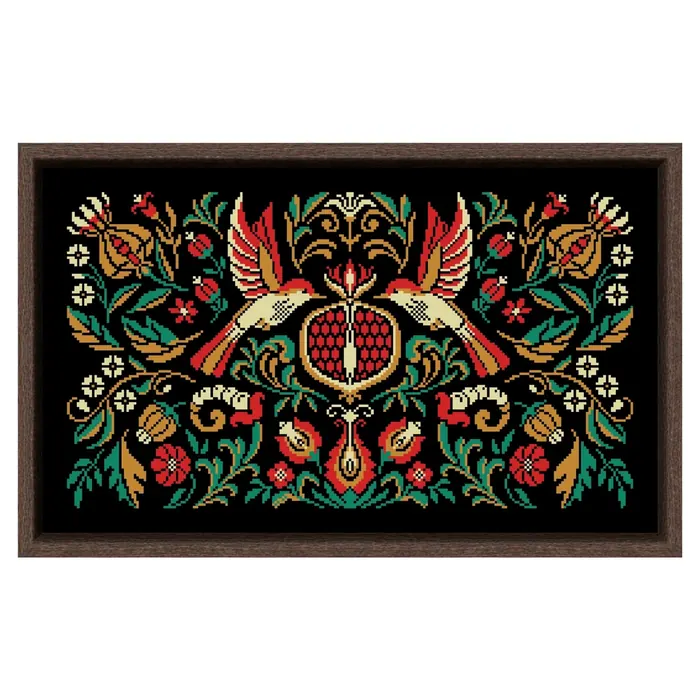
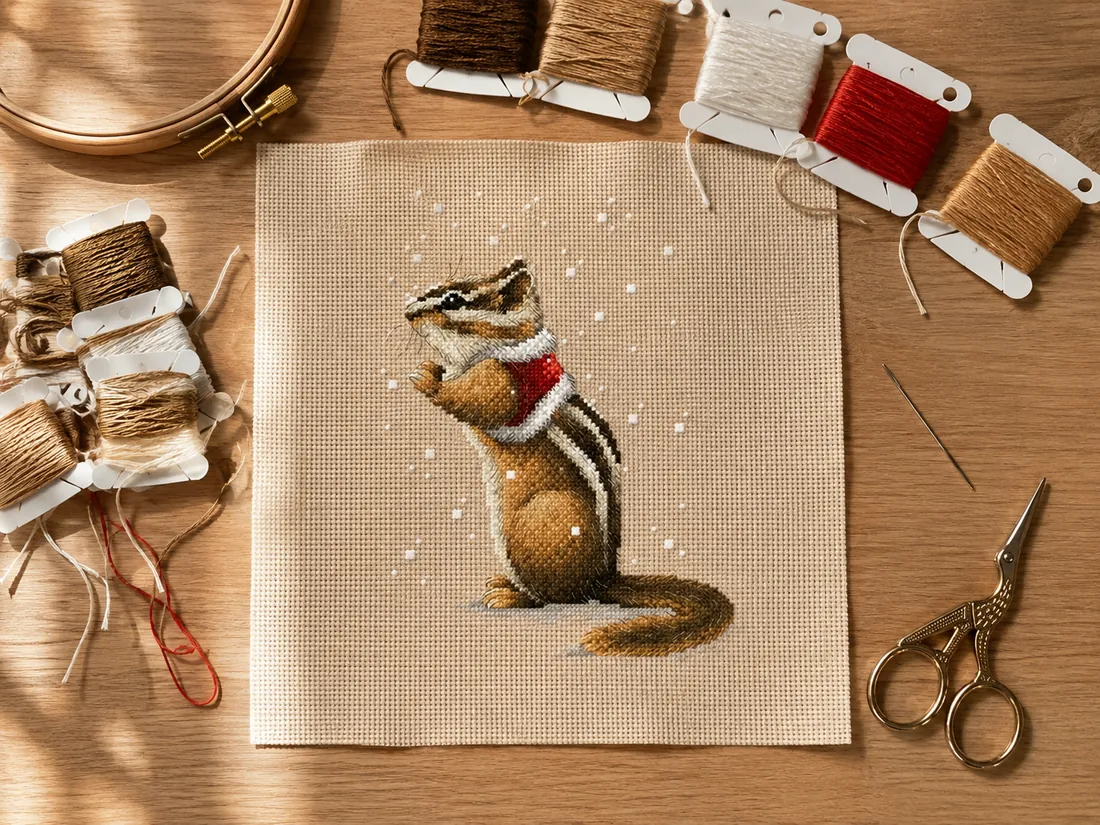
It also explains why photographs settle these arguments faster than descriptions do. Look at a piece in progress and the technique announces itself: countable squares and identical crosses mean cross stitch, whatever the listing said.
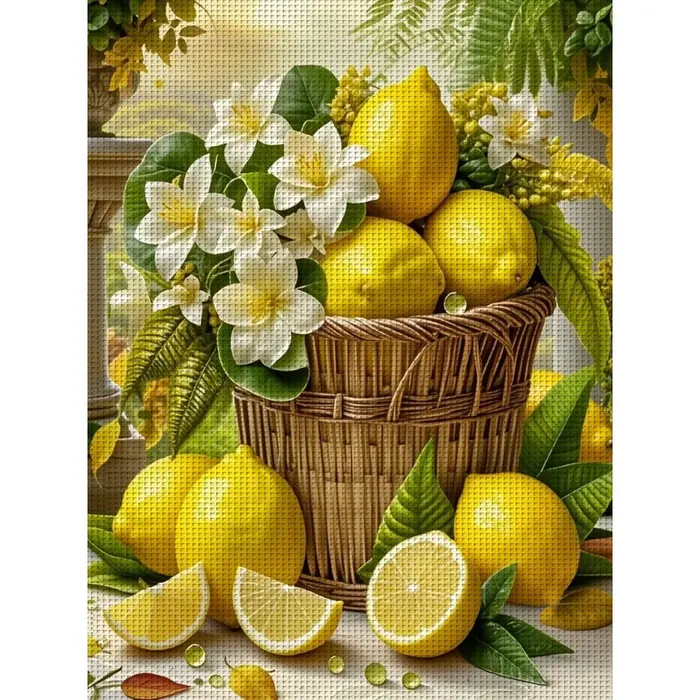
The buyer who sent that photo wrote: "Pretty design. Colors really pop on the fabric and make it look so good." More of them, kit by kit, sit on our reviews page.
Which One Should You Learn First?
None of the three is a beginner version of another. They ask for different things: cross stitch asks for patience with counting, embroidery for control of the needle, needlepoint for stamina and a yarn budget. Plenty of stitchers work all three and keep a project bag for each.
What tips most first timers toward cross stitch is kit economics. A complete counted kit hands you fabric cut to count, sorted threads, needles and the chart, so the only decision left is the design. Our beginner cross stitch kits are chosen on that basis, and the traps worth knowing early are in 10 beginner cross stitch mistakes. Choosing between a printed design and a blank chart is a separate question, answered in stamped vs counted cross stitch.
studies in a scoping review found needlecraft has an overwhelmingly positive effect on mental health and wellbeing, whichever of the three you pick
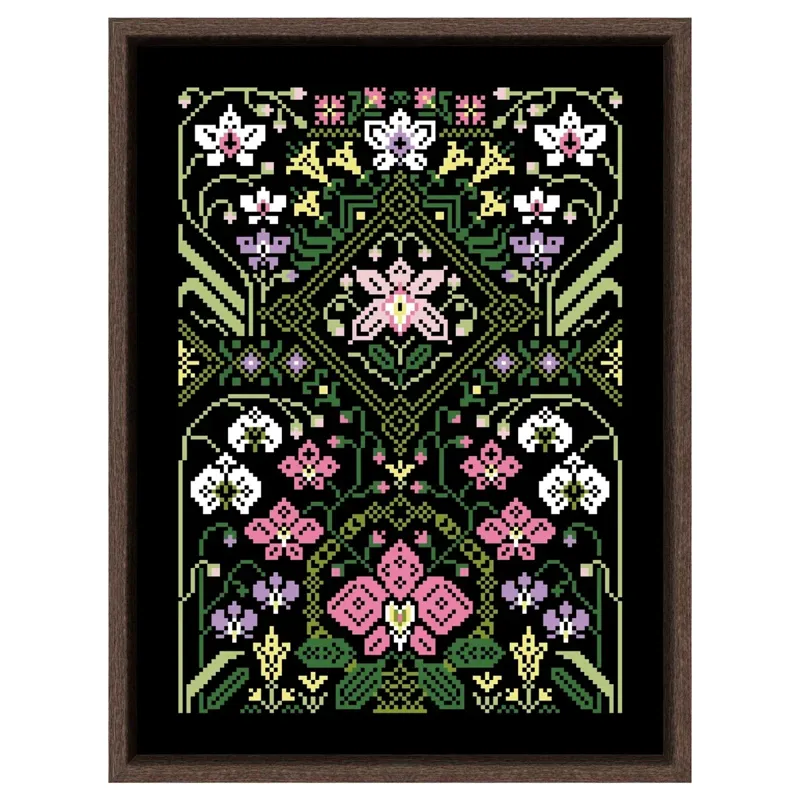
What Carries Over Between the Three?
Cross stitch and needlepoint both use a blunt tapestry needle, because the holes already exist and the point only has to slide between threads. Surface embroidery uses a sharp needle that pierces the cloth wherever the design asks. Swap them and you feel it at once: a sharp needle splits stitches on Aida.
Every CozyCross kit ships with cotton threads pre sorted on numbered cards, one or two needles, and a printed color chart. We leave the hoop out, because any 6 to 8 inch hoop fits the small motifs and stiff Aida can be worked in hand. What we check before a kit joins the range is on how we test.
annual size of the US creative products market that cross stitch, embroidery and needlepoint all share
of US households took part in at least one creative activity in the past 12 months
Where CozyCross Fits
If this guide has pointed you toward cross stitch, everything you need is already in one box: fabric cut to the count you pick, premium floss sorted to the chart, needles, and a full-size chart or a sharp print. That is the whole appeal of the craft on a first project.
Our line, plainly stated: 7 kits, 49 designs, on flaxen, white, sky blue and black Aida in 11CT to 18CT depending on the kit, from $24.95 to $39.95. Free shipping, dispatch in 1 to 2 business days, delivery in 6 to 10 business days, and a 30 day money back guarantee.
Browse everything from the cross stitch kits homepage, or compare our counted cross stitch kits against the stamped cross stitch kits.
Cross Stitch vs Embroidery FAQ
Is cross stitch the same as embroidery?
Cross stitch is one technique inside embroidery, in the counted thread branch. Every cross stitch piece is embroidery, but not every embroidery piece is cross stitch. When a shop advertises an embroidery kit it usually means surface embroidery with a mix of stitch types.
Can you cross stitch on ordinary fabric?
You can, but you have to supply the grid. Stitchers lay waste canvas or a soluble gridded film over plain cloth, stitch through both layers, then remove the guide. Aida makes that grid permanent and visible, which is why kits are built around it.
Is needlepoint harder than cross stitch?
It is different rather than harder. Tent stitch is simpler to form than a full cross, and a hand painted canvas removes chart reading entirely. What needlepoint asks for is stamina and materials, because the canvas has to be covered completely.
Can I use cotton embroidery floss for needlepoint?
Yes, and many stitchers do, but coverage decides the strand count. Needlepoint canvas has larger holes than Aida, so cotton floss is used many strands at once, or replaced by wool. On fine petit point canvas, cotton floss is a common choice.